Axion Lab
  • Service modules

    Carbon footprintDecarbonisation trajectoryClimate value creationClimate reporting
  • Case studies
  • Blog
  • Contact

Carbon footprint reports
for business decisions

Built for European funds and their portfolio companies.

Read a case study→

Trusted by European PE funds and their portfolio companies

  • Aire
  • La Financière d'Orion
  • Mimacom
  • Odealim
  • saal
  • Simago
  • SYCLEF
  • Vecos
  • Vista Vision

Our carbon footprint reports are used for

Sustainability-linked loans

Unlock better financing terms.

Customer requirements

Meet supplier-side ESG requests and win your next tender.

Cost optimisation

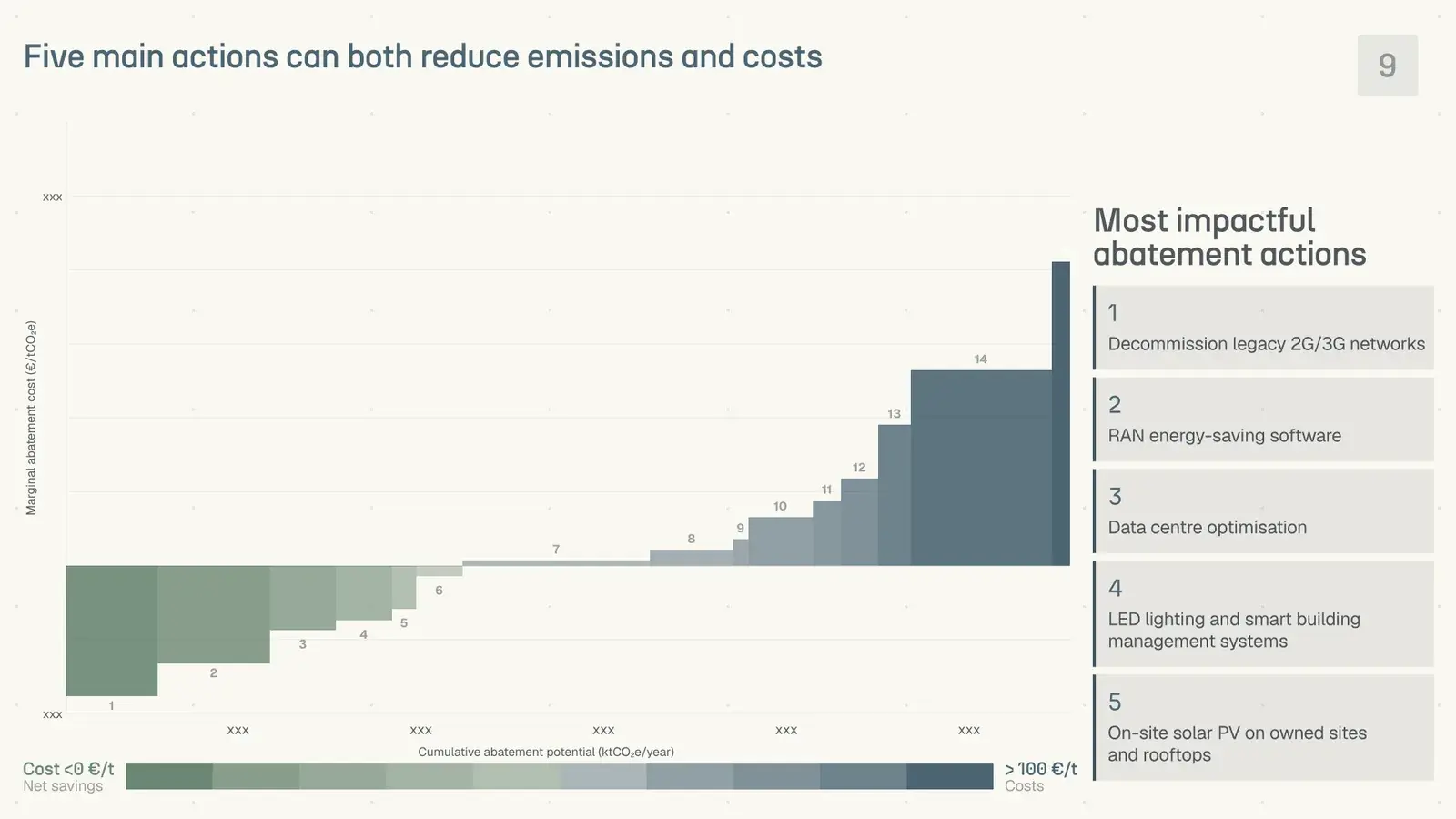
Identify net saving actions that cut emissions.

Compliance readiness

  • SFDR
  • CSRD
  • SDR
  • SECR
  • TCFD
  • VSME

Certifications & Ratings

  • ISO
  • SBTi
  • CDP
  • EcoVadis
  • B-Corp

Risk management

Learn how much extra emissions will cost you.

Competitive advantage

Increase your multiple by standing out with backed climate commitments.

How Axion Lab works

Illustrative example. Figures are not a real client footprint.

  1. 01Data intake

    No questionnaire, just your files

    We start with a short call to scope what matters, then you hand over documents you already have: previous carbon footprint reports, bills, invoices, etc. Nothing to fill in, nothing to format.

    30-min scoping call
  2. 02Engine + expert review

    We turn your business data into GHG emissions

    AI system converts each line of activity into emissions and sorts it by scope. The climate expert builds a business story behind it.

    Scope 1
    Fleet diesel2.5M L6,800 t
    Scope 2
    Grid electricity4.8M kWh1,200 t
    Scope 3
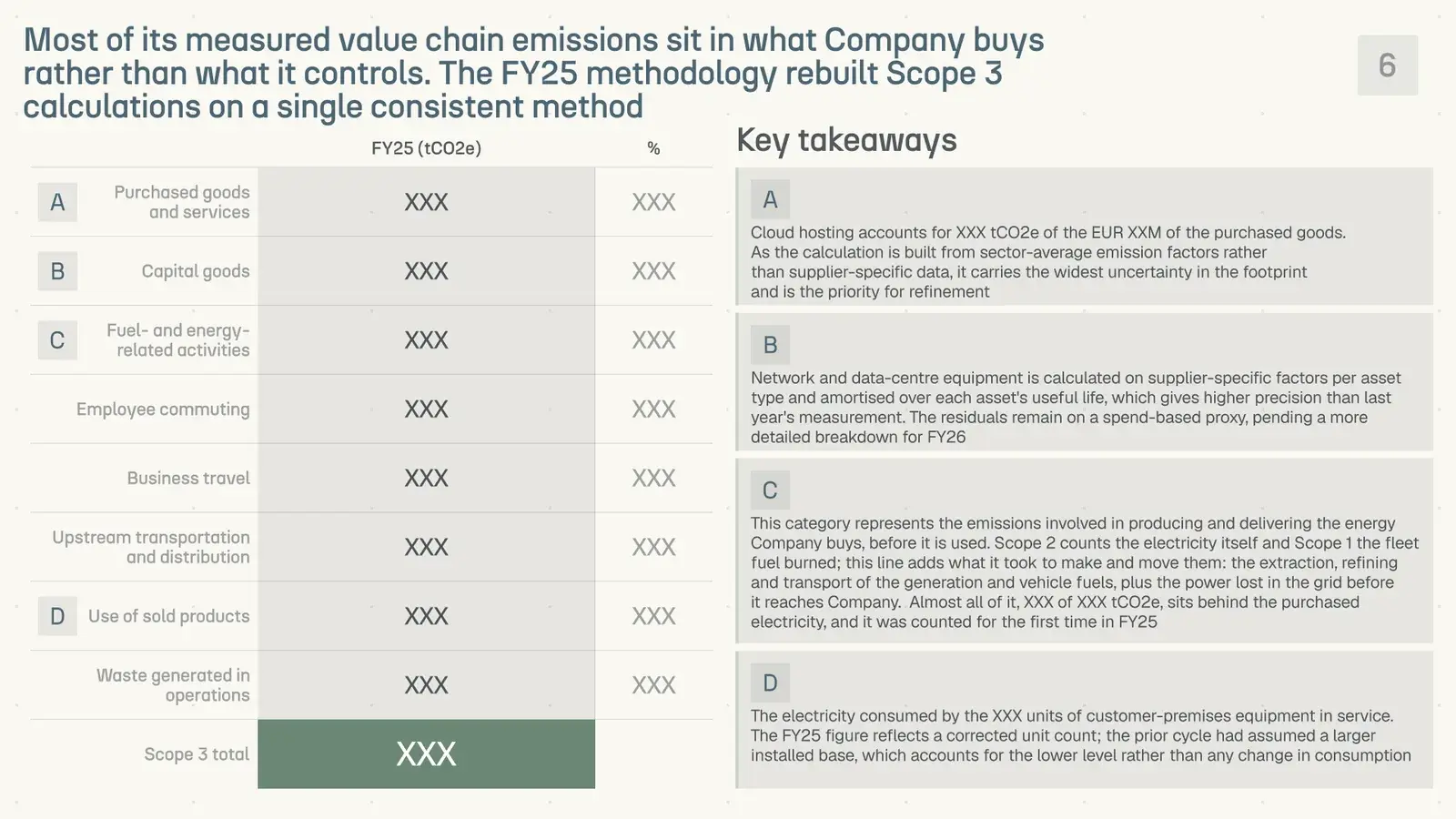
    Subcontracted freight78M t·km11,400 t
    Purchased goods€49M spend3,900 t
    Business travel5.8M km1,500 t
  3. 03Audit-ready delivery

    Carbon results you can act on

    You get absolute emissions and tailored climate KPIs, traceable line by line. Ready to certify, to set a target, or to put in front of a lender, an investor, or a customer.

    Audit-ready footprint
    24,800 tCO₂e
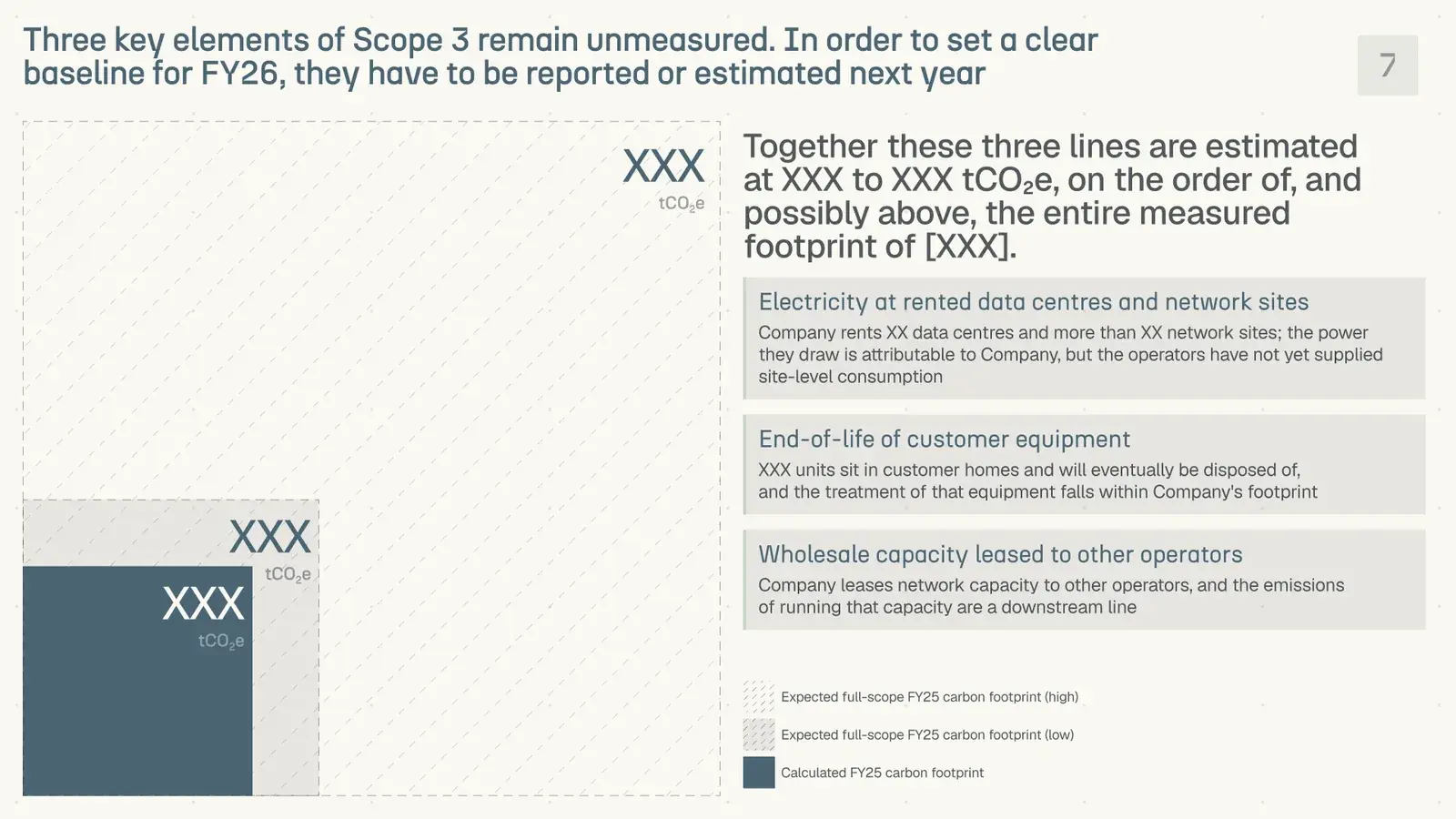
    + unmeasured Scope 3 (~3,000-6,000 t)
    S1
    6,800
    S2
    1,200
    S3
    16,800
    Traceable line by line
    Every figure→its activity→emission factor→source doc
  1. 01Data intake

    No questionnaire, just your files

    We start with a short call to scope what matters, then you hand over documents you already have: previous carbon footprint reports, bills, invoices, etc. Nothing to fill in, nothing to format.

    30-min scoping call
  2. 02Engine + expert review

    We turn your business data into GHG emissions

    AI system converts each line of activity into emissions and sorts it by scope. The climate expert builds a business story behind it.

    Scope 1
    Fleet diesel2.5M L6,800 t
    Scope 2
    Grid electricity4.8M kWh1,200 t
    Scope 3
    Subcontracted freight78M t·km11,400 t
    Purchased goods€49M spend3,900 t
    Business travel5.8M km1,500 t
  3. 03Audit-ready delivery

    Carbon results you can act on

    You get absolute emissions and tailored climate KPIs, traceable line by line. Ready to certify, to set a target, or to put in front of a lender, an investor, or a customer.

    Audit-ready footprint
    24,800 tCO₂e
    + unmeasured Scope 3 (~3,000-6,000 t)
    S1
    6,800
    S2
    1,200
    S3
    16,800
    Traceable line by line
    Every figure→its activity→emission factor→source doc

The compromise you no longer make

  1. 01

    Ready for audit and certifications

    Format tailored for your lender, investor, client or regulator.

  2. 02

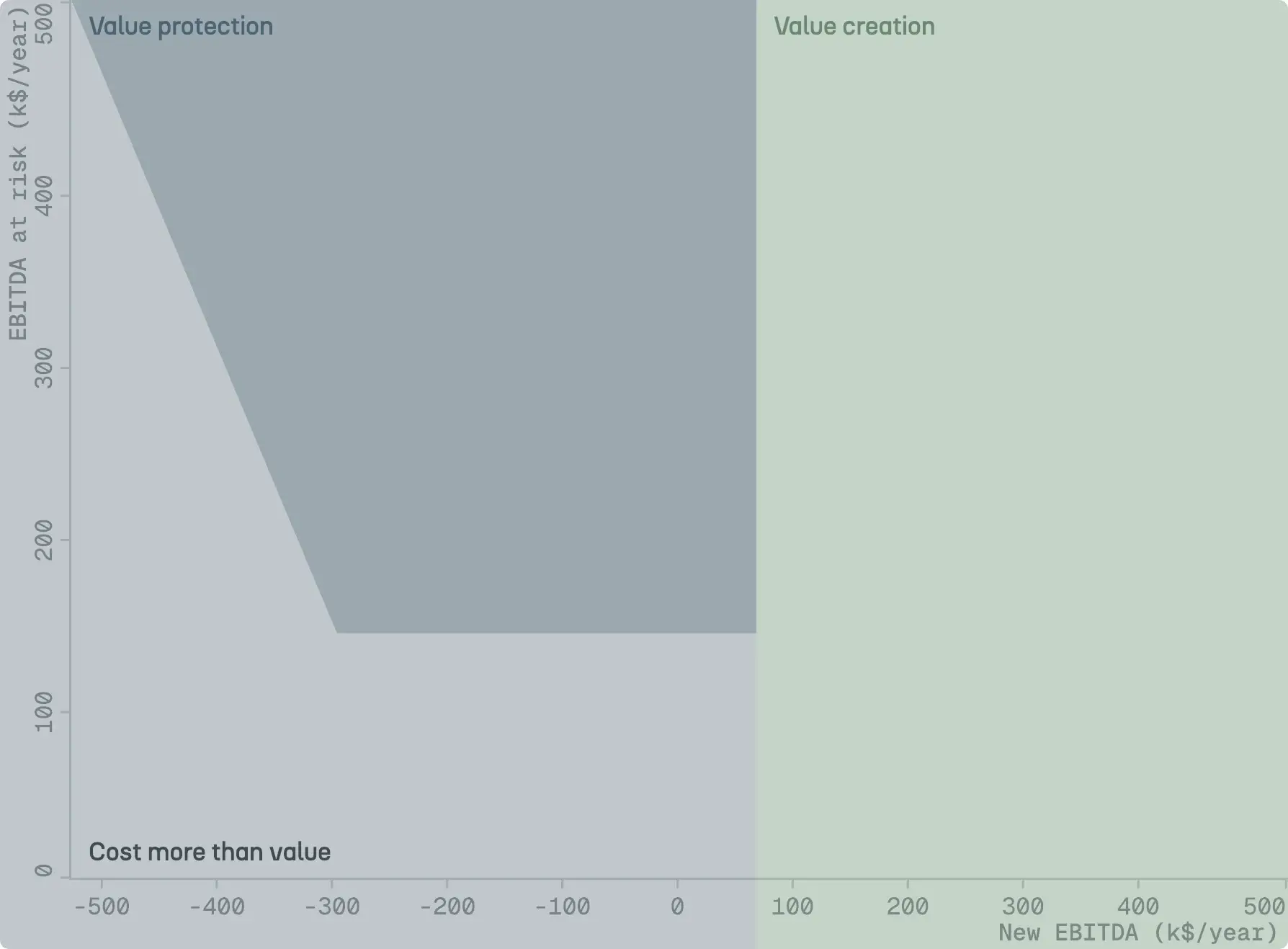
    Linked to business decisions and EBITDA

    Actions in line with your business strategy with calculated savings and ROI.

  3. 03

    Signed by climate experts

    Senior professionals delivered 100+ carbon footprints over their career.

  4. 04

    Carbon footprint delivered in hours

    Get your first carbon footprint results in under 48 hours.

  5. 05

    Transparent in calculations

    All methodologies, emission factors and assumptions are open and documented.

What's inside

01/ 06
  1. 01

    Climate KPIs tailored to your business needs

  2. 02

    Estimations of what's still unmeasured

  3. 03

    Avoided emissions

  4. 04

    Decarbonisation trajectories & scenario modelling

  5. 05

    Detailed explanation of each YoY change

  6. 06

    Quantified costs and savings of each decarb action

Case studies

  • IndustrialsComing soon

    Case study coming soon

    →
  • ServicesComing soon

    Case study coming soon

    →
  • LogisticsComing soon

    Case study coming soon

    →
  • FinanceComing soon

    Case study coming soon

    →

Built on regulated ground

Secure your data

05 / 05
  • End-to-End Encryption
  • GDPR Compliant
  • Zero Data Retention
  • No Model Training
  • EU AI Act Compliant

In line with regulations & certifications

01 / 08
JurisdictionEU
SFDR

Sustainable Finance Disclosure Regulation

  • 01SFDR — Sustainable Finance Disclosure Regulation (EU)
  • 02CSRD — Corporate Sustainability Reporting Directive (EU)
  • 03SDR — Sustainability Disclosure Requirements (UK)
  • 04SECR — Streamlined Energy & Carbon Reporting (UK)
  • 05ISO 14064 — Greenhouse gas accounting standard (INTL)
  • 06SBTi — Science Based Targets initiative (INTL)
  • 07CDP — Climate disclosure platform (INTL)
  • 08EcoVadis — Sustainability rating (INTL)

FAQ

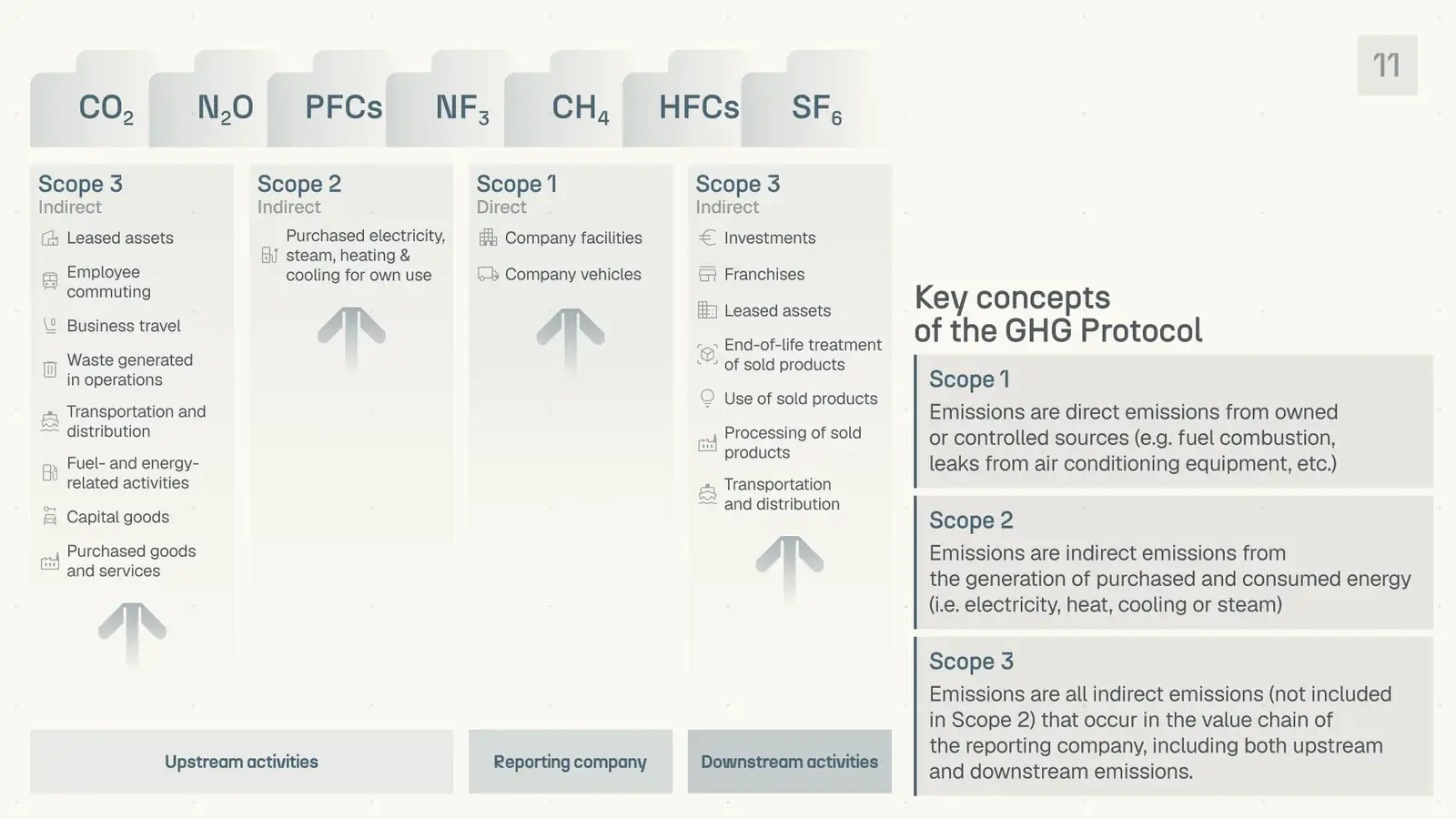
A finished carbon footprint report built to the GHG Protocol: direct emissions (Scope 1), purchased energy (Scope 2, both location- and market-based), and value-chain emissions (Scope 3), scoped to the categories that matter for your sector. Every number carries its factor, source, and vintage, so it can be traced rather than trusted. Deeper transition work, target validation and full abatement-cost modelling, may come as an additional next step.

A senior climate expert scopes the boundary, sets the materiality screen, makes the factor calls, and signs the result. Everything between is automated: pulling your activity data, applying factors, calculating Scope 1, 2, and 3, benchmarking, and drafting. The split is deliberate, because the judgment calls are where footprints go wrong, which factor for which activity, what counts as material, where an estimate holds.

Automation carries the volume; the expert owns the calls and puts a name to them. Every factor and assumption shows on the page, so nothing hides inside a model you cannot inspect.

Reports we prepared have been filed for ISO verification and used to disclose against sustainability-linked loans. A footprint is not an assurance engagement in itself; it is the inventory a verifier checks. So we build it the way a verifier reads it: boundary stated, methodology in full, every factor traceable to its source and year. That is the inventory standard, ISO 14064-1:2018; the verifier signs under ISO 14064-3. We build the first so they can do the second.

Yes. EcoVadis, CDP, and customer questionnaires all want the same two things: a defensible number and the method behind it. The report carries both, with the data-quality basis stated per category, which is what scorers and procurement teams probe hardest. CDP rewards Scope 3 coverage and a disclosed method over a single headline figure, and the report answers at that grain.

We prepare the report and the evidence behind it, formatted so you can file it directly. The submission stays with you, the CDP response, the EcoVadis upload, the lender return, because the disclosure is made in your name. Where a framework wants a particular layout, we deliver the numbers in that shape, so filing is a copy-across, not a rebuild.

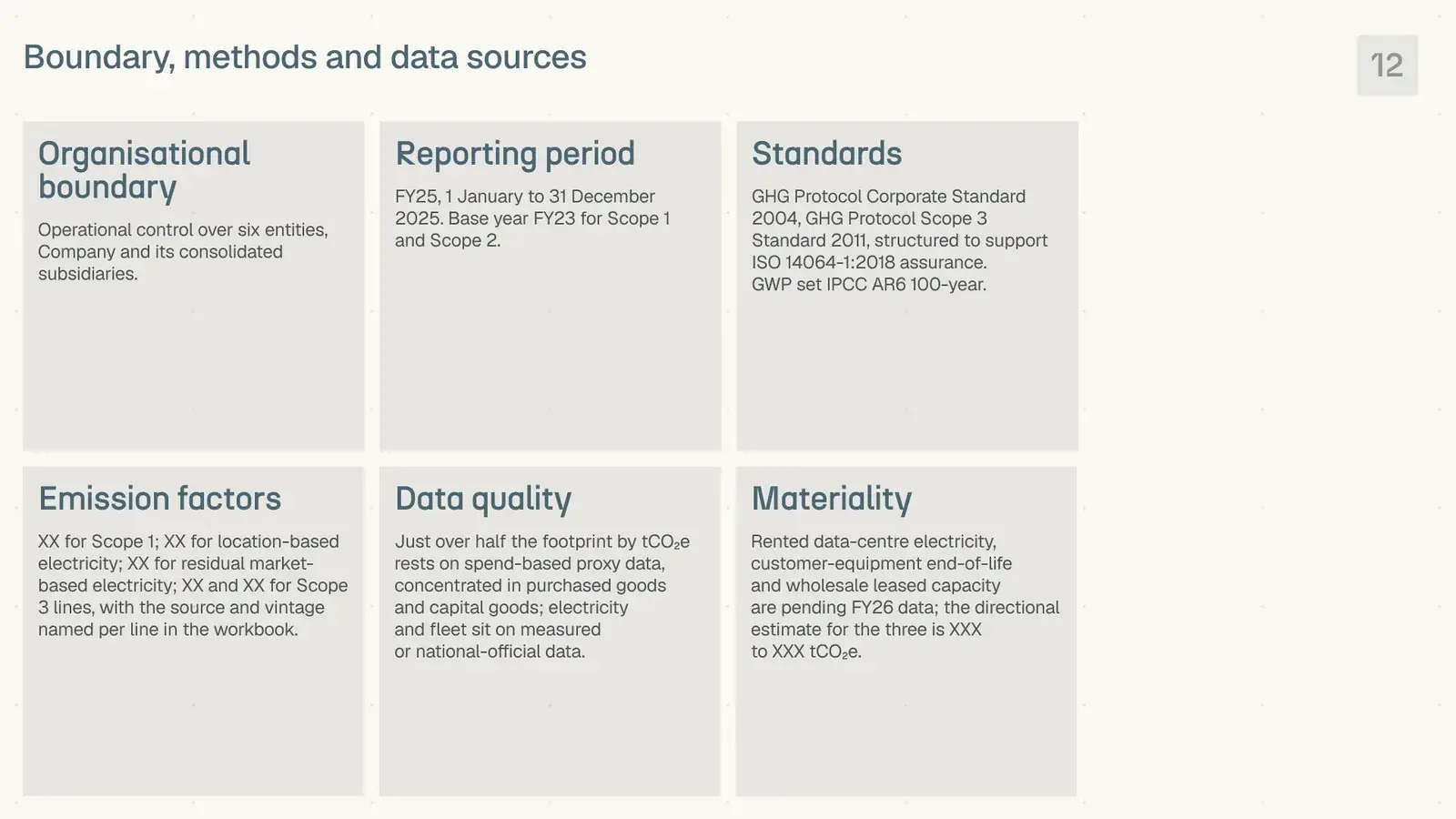
The GHG Protocol Corporate Standard governs Scope 1, 2, and 3, with its Scope 3 standard for value-chain accounting. The inventory is structured to support ISO 14064-1:2018 verification, and SECR where you report in the UK. Targets follow the SBTi criteria; financial-sector clients add PCAF for financed emissions.

Where CSRD applies, the inventory maps to the climate datapoints, and where it does not yet bind, which is most mid-sized companies, we tell you rather than manufacture a deadline.

Software hands your team the tool and leaves them the work: data entry, factor choices, materiality calls, interpretation. You end with a dashboard and an open question, would it survive a verifier? We hand you the finished report, the judgment calls already made and signed, ready for an auditor or a client tender. Software leaves the hard part, factor selection and materiality, with your team; we hand it over done.

A traditional engagement runs weeks and prices to match, because the extraction, calculation, and drafting are done by hand. We automate that, so it runs in days, and the expert's time goes where it changes the answer: scope, materiality, factor judgment, review. Same defensible report, signed by a named expert, without the bill for manual hours.

Building it in-house means a climate hire, buying emission-factor data, and keeping the method current as standards change, rarely worth it for a report you need once or twice a year. We carry the production and hand your team the report and the full methodology. You own the narrative with auditors, customers, and investors, without owning the grind.

A scoping call, a data handover, a review of the draft. We do the extraction, factor selection, calculation, and writing in between. At scoping we tell you exactly which activity data we need, so the handover is a defined list, not an open-ended hunt. Your team spends hours across the engagement, not weeks.

Scoping and handover come first; from a reasonably complete handover to a first draft is 48 hours, then one review round before it is final. Messy or partial data stretches the collection, not the production, and we commit to a realistic date at scoping, not after.

Your business context and historical carbon footprint results, if they exist, as well as the activity data: energy bills, fleet and travel, purchased goods, and whatever sits behind your main emission sources. We tell you exactly what is needed in the scoping call and work with what you have.

Yes. We consolidate across sites, legal entities, or a whole portfolio under one boundary, keeping each entity's data traceable so you can report at group level or split it by site. For a portfolio owner, we hold the method constant across holdings, so the footprints compare like-for-like instead of each on its own basis.

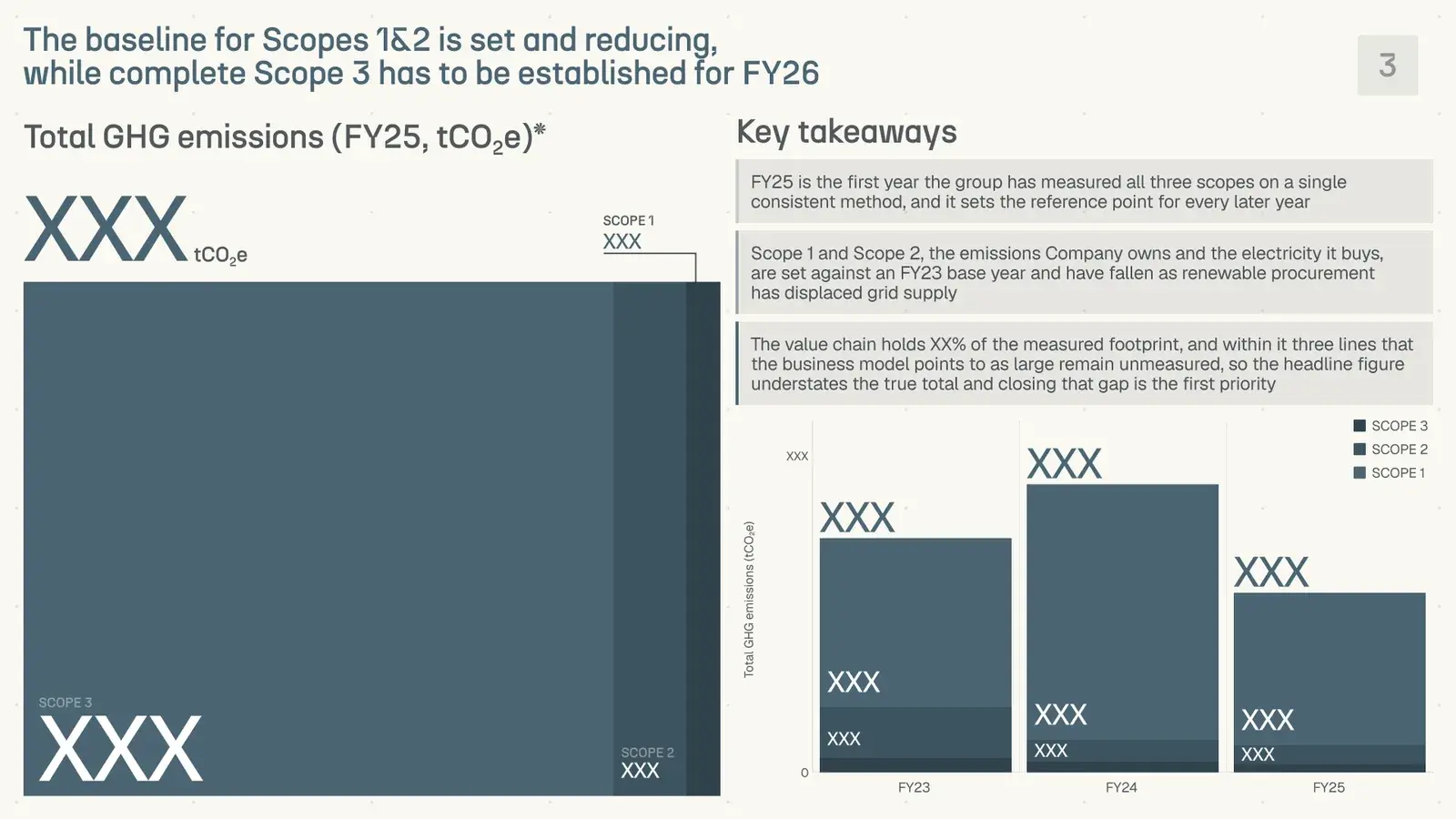
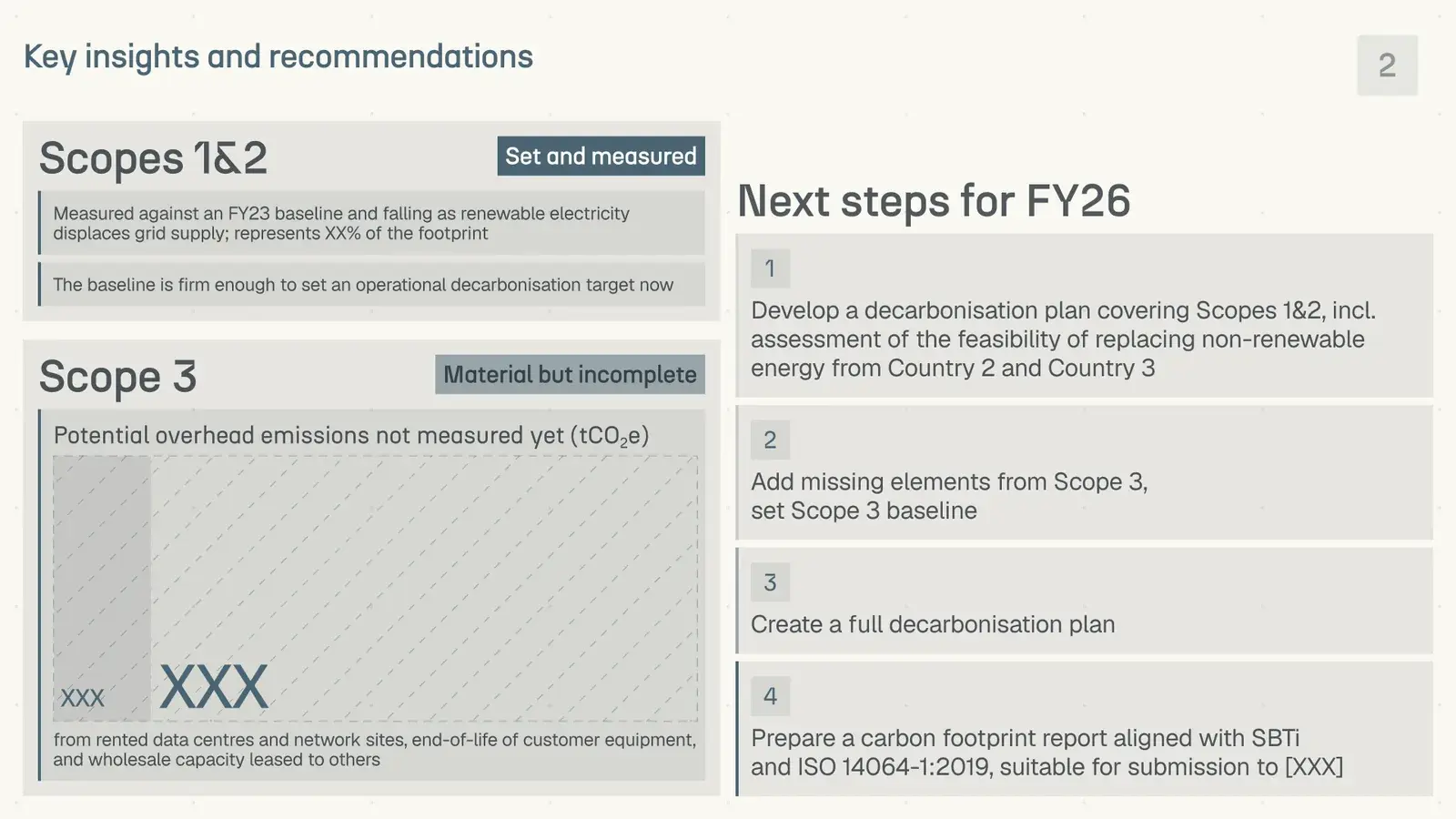
That is the normal starting point, and the method is built for it. Where a figure is missing, we estimate it on a stated basis, supplier data first, then physical activity factors, then a documented spend-based or proxy fallback. Each category is labelled by data quality, so the soft lines stay visible, not buried. You see which numbers are set and measured and which are material but incomplete, with the weakest material line flagged as next year's priority.

Yes, and Scope 3 is usually where the most footprint sits. We calculate it alongside Scope 1 and 2, category by category, and the report shows which are measured, which estimated, and on what basis. A materiality screen runs first, so the effort goes to the categories that carry your total, purchased goods, use of sold products, or freight depending on your business, instead of spreading thin across fifteen that do not move the number.

Yes, and the materiality screen is built around it. A cooling business carries refrigerant losses in its direct emissions and the disposal of sold equipment downstream; an equipment maker carries the energy its products draw in use; a freight-heavy business carries inbound and outbound transport. We scope to your business model, not a generic template, and draw the peer set from your sector.

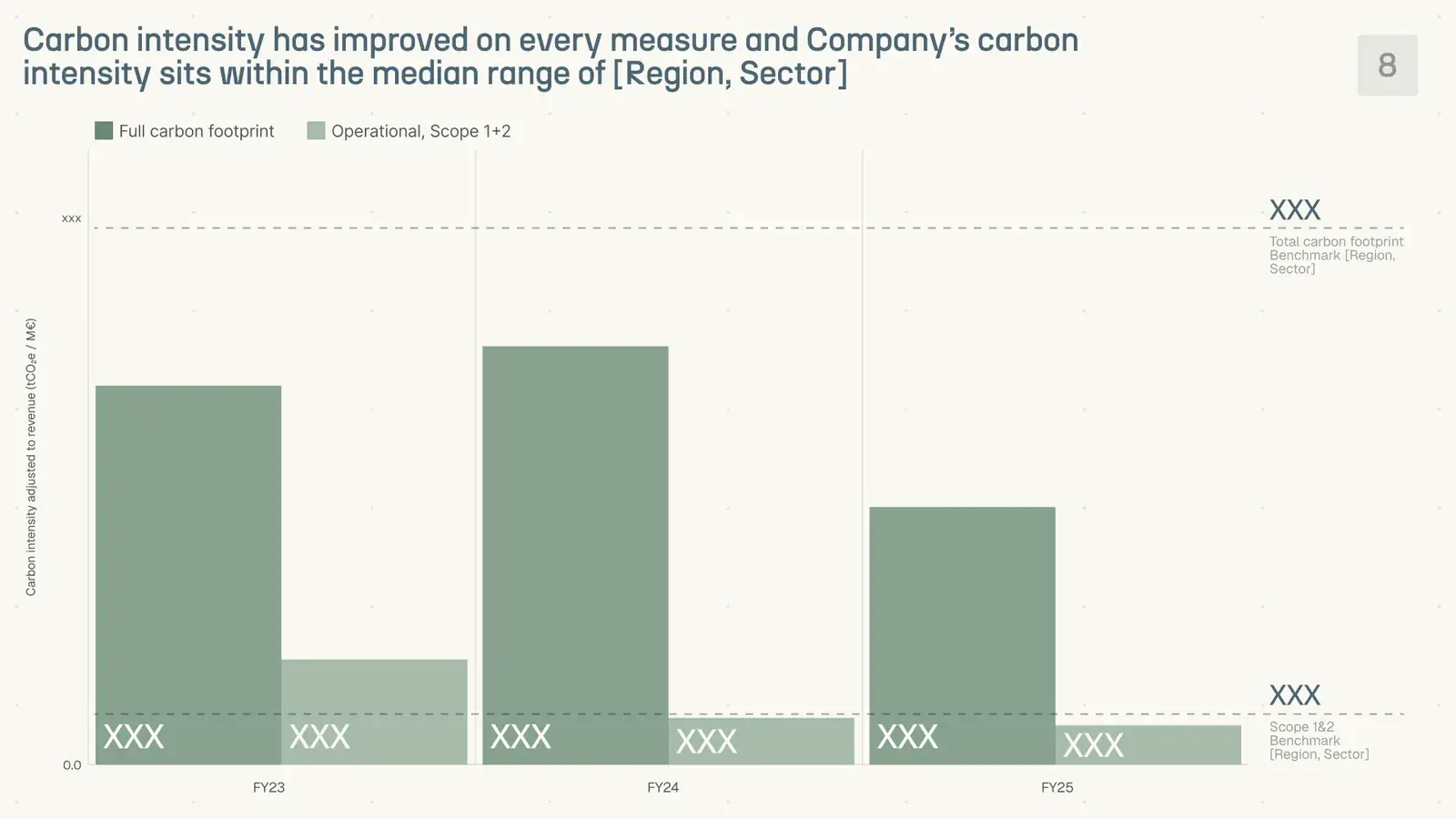
Yes. We set your footprint against a sector peer set on a full-footprint intensity basis, so the comparison is like-for-like, not absolute tonnes against a company of a different size. That gives the number context: where your intensity sits against peers, and which categories drive the gap.

Both, with a clear line between them. The report measures, then sets out a costed reduction pathway: the levers open to you, ranked by size of prize against difficulty. The deeper transition work, a full abatement-cost curve, scenario analysis, internal carbon pricing, target validation, is a defined next engagement, not something thinned across the footprint. Measurement leads to decisions, and you choose how far down the path to go.

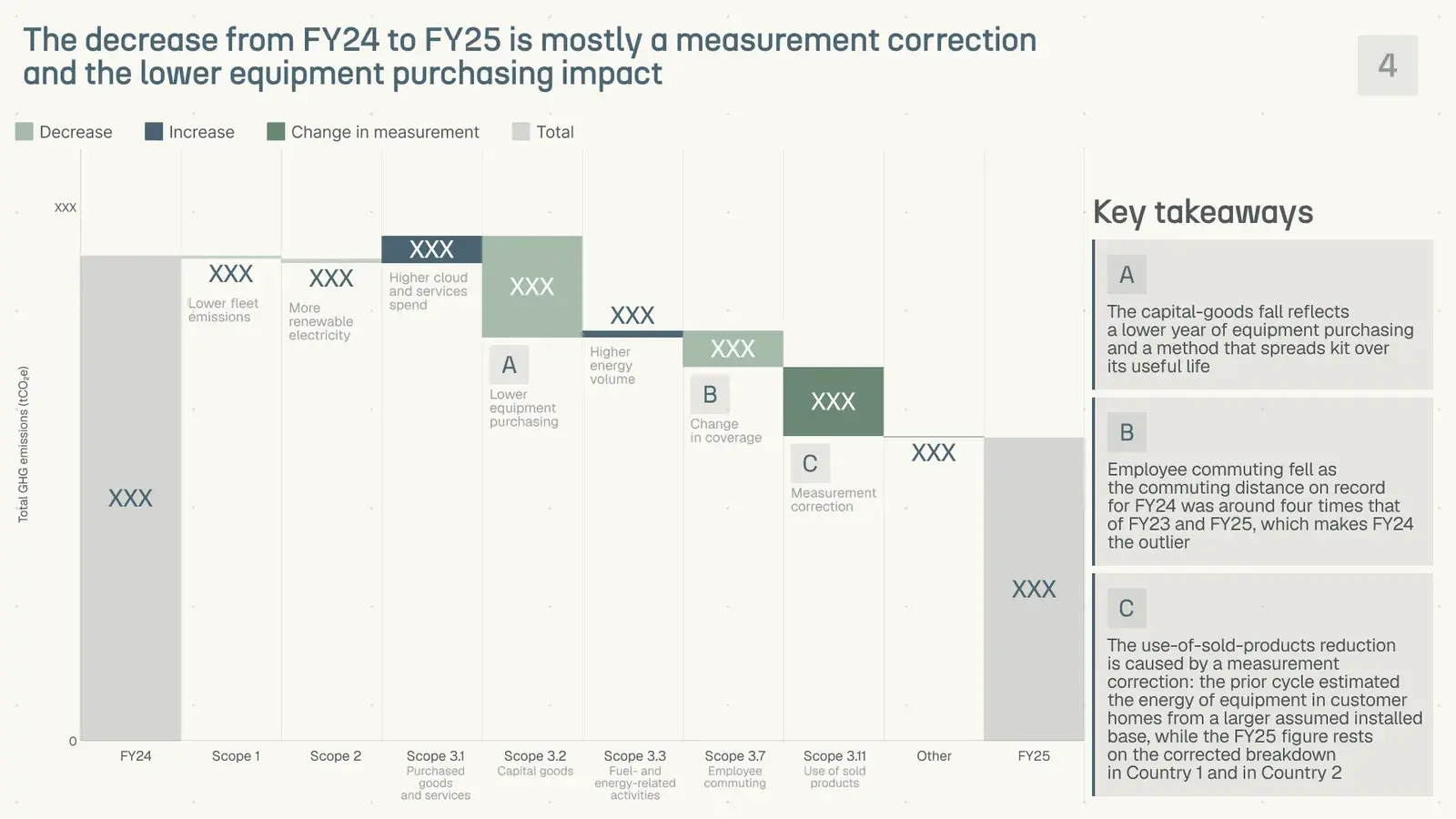
Yes, and the second year is where this pays off. Once the first report fixes the boundary, method, and baseline, each annual update reuses them, so the work is faster and the series stays comparable. When a method improves between years, we show it as a measurement change separate from real change in a year-on-year bridge, so a swing reads as a better number, not a past error.

You do. The report and every working file, the model, the factor library, the activity data, are yours, to use and share as you decide. There is no platform you must stay subscribed to in order to keep your own numbers.

A fixed fee per report, agreed before we start, at a fraction of a comparable consultancy engagement. No day-rate meter, no scope-creep billing: scope and fee are both set at the scoping call.

Your data is hosted in the EU, nothing is retained after delivery, and none of it trains any model. The report and all working files are yours. Automation runs at the core of what we do, so that boundary is deliberate: your activity data and emissions are commercially sensitive, and they stay with you.

No. We deliver for PE-backed companies, where an owner often wants consistent footprints across holdings, and for independent corporates reporting to their own customers, lenders, or targets. The fixed per-report fee keeps it viable at any size: a footprint should not cost more than the decision it informs.

A 30-minute call about your business and what the report is for: EcoVadis, a loan covenant, a customer tender, a baseline for targets, because the use case shapes the scope. We confirm the boundary, timeline, and fixed fee, and start from there.

Site footer

Axion Lab

Carbon footprint reports that connect to business decisions.

Services

  • Carbon footprint
  • Decarbonisation trajectory
  • Climate value creation
  • Climate reporting

Company

  • Case studies
  • Blog
  • Contact

Follow

  • LinkedIn(opens in new tab)

© 2026 Axion Lab S.à r.l.·Registered office: 2, Rue Jean Engling, L-1466 Luxembourg, Grand Duchy of Luxembourg·RCS Luxembourg B307285

  • Legal Notice
  • ·Privacy Policy
  • ·Cookie Policy
  • ·