An investment committee is looking at two versions of the same portfolio company. The lender pack shows one emissions figure, the board deck shows another, and nobody in the room can say quickly which source file, factor, or estimate produced either number. That moment is where most ESG reporting software decisions are made, not in a feature demo.
The useful question isn't which platform lists the most frameworks. It's which tool keeps figures, sources, assumptions and owners traceable when a lender, board or buyer challenges them, and which one turns that evidence into a spending decision instead of a prettier PDF. Disclosure is now close to universal at the top end. KPMG's 2024 survey, covered in GRI's summary of global adoption, examined 5,800 companies and found 97% disclosed some sustainability information in 2024, while 75% obtained at least some level of assurance.
That shift changes the buying criteria. A system that only assembles a report leaves the hard work, evidence collection, calculation logic, boundary choices and review history sitting in inboxes. The options below are judged on capital allocation value, portfolio consistency and traceability, plus the internal ownership each one assumes. Some are disclosure engines, some are carbon calculators, and one is built around priced actions rather than templates.
Table of Contents
- 1. Axion Lab
- 2. Position Green
- 3. Workiva
- 4. Novisto
- 5. Persefoni
- 6. Watershed
- 7. IBM Envizi ESG Suite
- 8. Diligent ESG
- 9. Sweep
- 10. Greenly
- How the ten platforms compare on focus, pricing transparency and best fit
- Turning a Shortlist into a Defensible Decision
1. Axion Lab
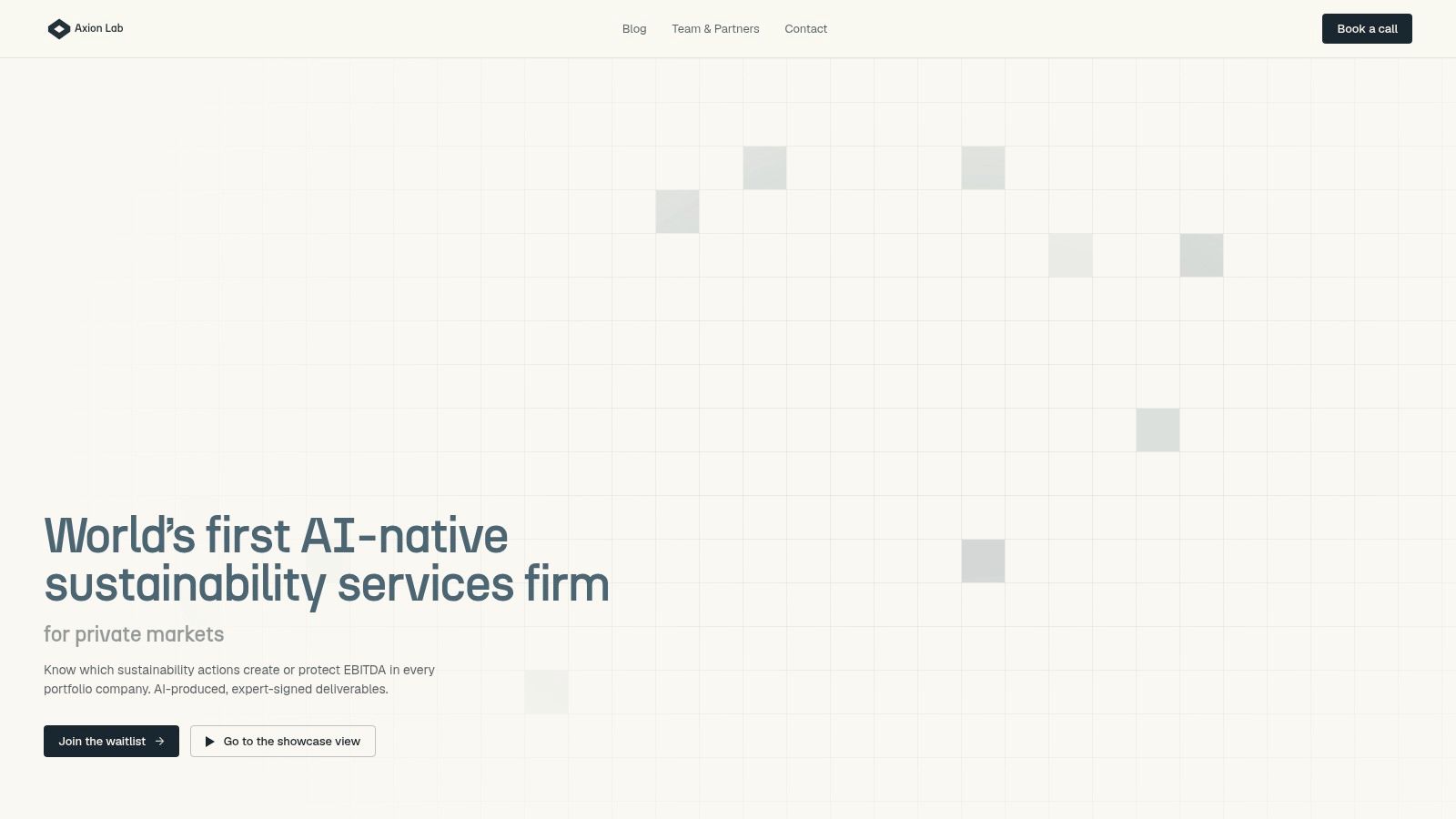
Most platforms start with a data request. This one starts with the documents a company already has: data room files on a deal, or previous reports, policies, operational data, invoices and board materials inside a portfolio company. Scoping comes first, on a call with a senior expert who agrees who the report is for and what it needs to cover. The AI-native platform then reads the files, extracts data, runs calculations and drafts the analysis, asking only the questions the documents couldn't answer.
The core output is a Sustainability Capital Allocation map. Every action is priced: implementation cost, the EBITDA it creates or protects, and expected payback. Actions land in one of four groups, Required, Value protection, Value creation or Deprioritise, with anything unquantifiable flagged as needing more information. An investment committee gets a ranked spending list rather than a register of equally weighted initiatives.
Where the judgment sits
A named senior expert sets scope and methods, reviews conclusions and signs the deliverable. While a report is being drafted, the client can bring that expert in for a call, a working session or a second opinion on the draft. Formal outputs, a due diligence report, sustainability-linked loan KPIs, exit or fundraise data room preparation, an annual 360° review, come from the same map, formatted for the reader, whether that's the deal team, board, lender or regulator.
Clients keep the maps, reports, supporting data and the calculation model behind the numbers. The company states data is encrypted, excluded from model training, and handled under GDPR and EU AI Act requirements, with source files not retained after delivery.
Strengths: Actions tied to cost, payback and EBITDA. Consistent methods across portfolio companies with company-specific evidence retained. Coverage runs from buy-side diligence through post-acquisition integration planning, loan KPI preparation, carbon footprints ready for ISO certification and exit materials. Revenue isn't based on billed hours.
Limitations: No published standard pricing, so ongoing cost needs a direct conversation. An expert signature isn't an audit or independent assurance opinion, so formal assurance still requires an appointed third party.
The free trial covers three portfolio companies, with a Sustainability Capital Allocation map for each and a one-hour walkthrough with a senior expert. Details are at Axion Lab.
2. Position Green
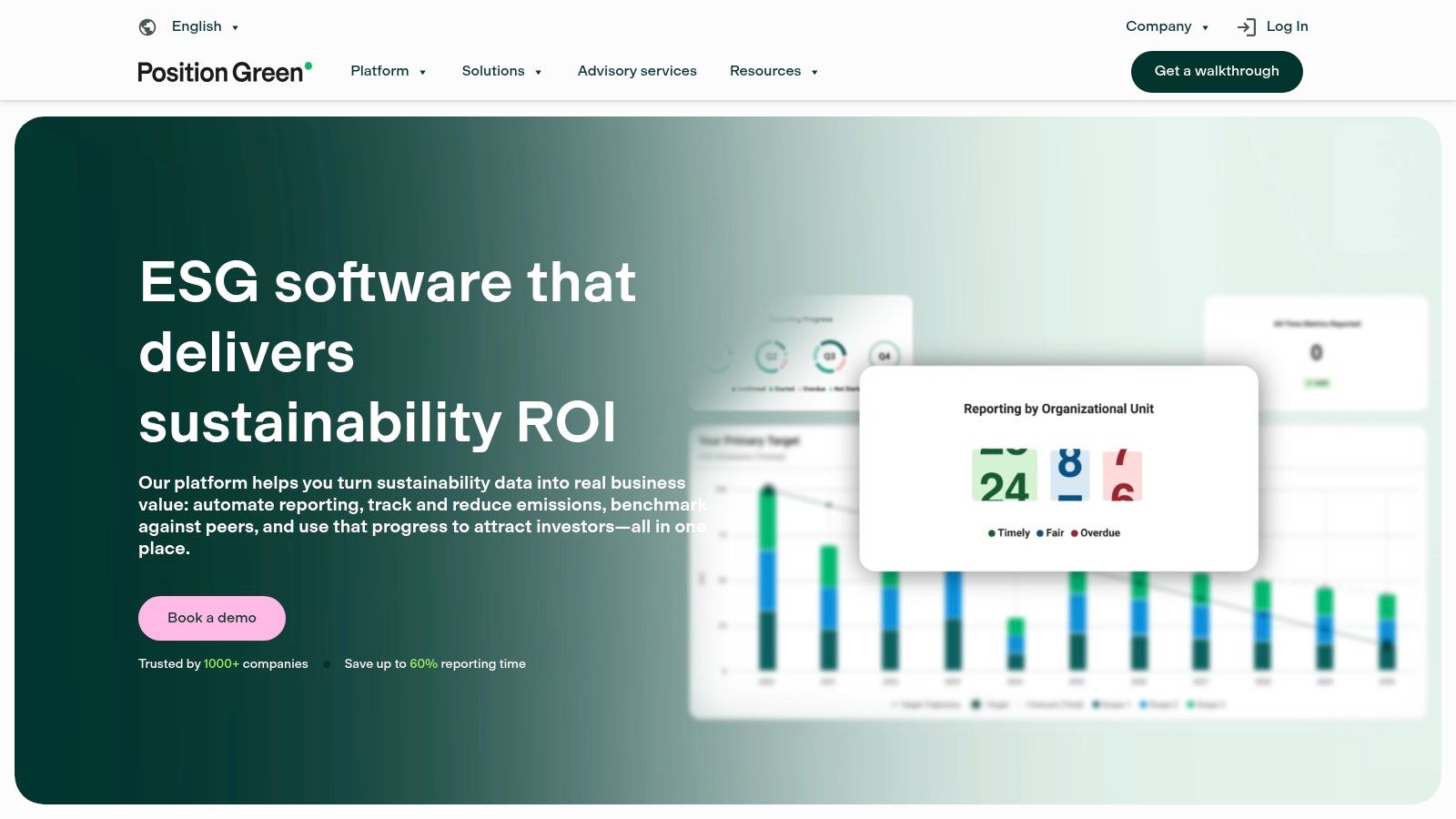
Position Green pairs ESG reporting software with advisory services, which matters for funds that don't want to build methodology alone. Its clearest fit is a sponsor rolling one reporting approach across several operating companies and needing the fund-level view to stay coherent.
Investment monitoring and portfolio company assessments sit alongside carbon management, supplier engagement and mandatory reporting. Group reporting and benchmarking then let a fund compare companies on shared definitions rather than reconciling ten local spreadsheets each quarter.
Trade-offs for portfolio use
Designed for both sides: Investors get oversight, operating companies get structured collection workflows.
Advisory attached: Sustainability expertise is available alongside the software, reducing reliance on a separate consultant for setup questions.
Ownership still required: Broad functionality needs configuration and a named internal owner, or templates drift company by company.
Pricing on request: There's no public list price, so total cost only emerges through a sales process.
Benchmarking is useful, but it isn't capital allocation. A dashboard can show which company lags on a metric. It won't, on its own, price the fix against EBITDA at risk, so teams expecting that layer should plan for separate expert-led analysis on top of the monitoring view.
3. Workiva
Workiva is the controlled-disclosure option. It connects sustainability data with financial reporting, governance, risk and audit workflows, so the same figure can move into an annual report, a questionnaire and investor materials without being retyped three times.
Its Sustainability Program handles topic selection, data collection and task assignment. Supporting information stays linked to the data point and the output, with permissions, review steps and traceability built for large, multi-team sign-off. Workiva Carbon adds emissions measurement and management where carbon is the gap.
A linked number is only as good as the evidence behind the first entry. Strong workflow controls don't fix a weak source document.
That control environment is the appeal for listed groups and finance-led reporting. It's also the cost. Implementation and ongoing administration are real commitments, and a smaller portfolio company with one annual disclosure may find the platform heavier than the job. Pricing isn't publicly listed, which makes early budget screening harder.
For investment teams, Workiva suits a portfolio company that's already reporting like a public company. It is less naturally a tool for deciding which sustainability actions deserve capital first, because its gravity sits in disclosure production and review rather than priced prioritisation.
4. Novisto
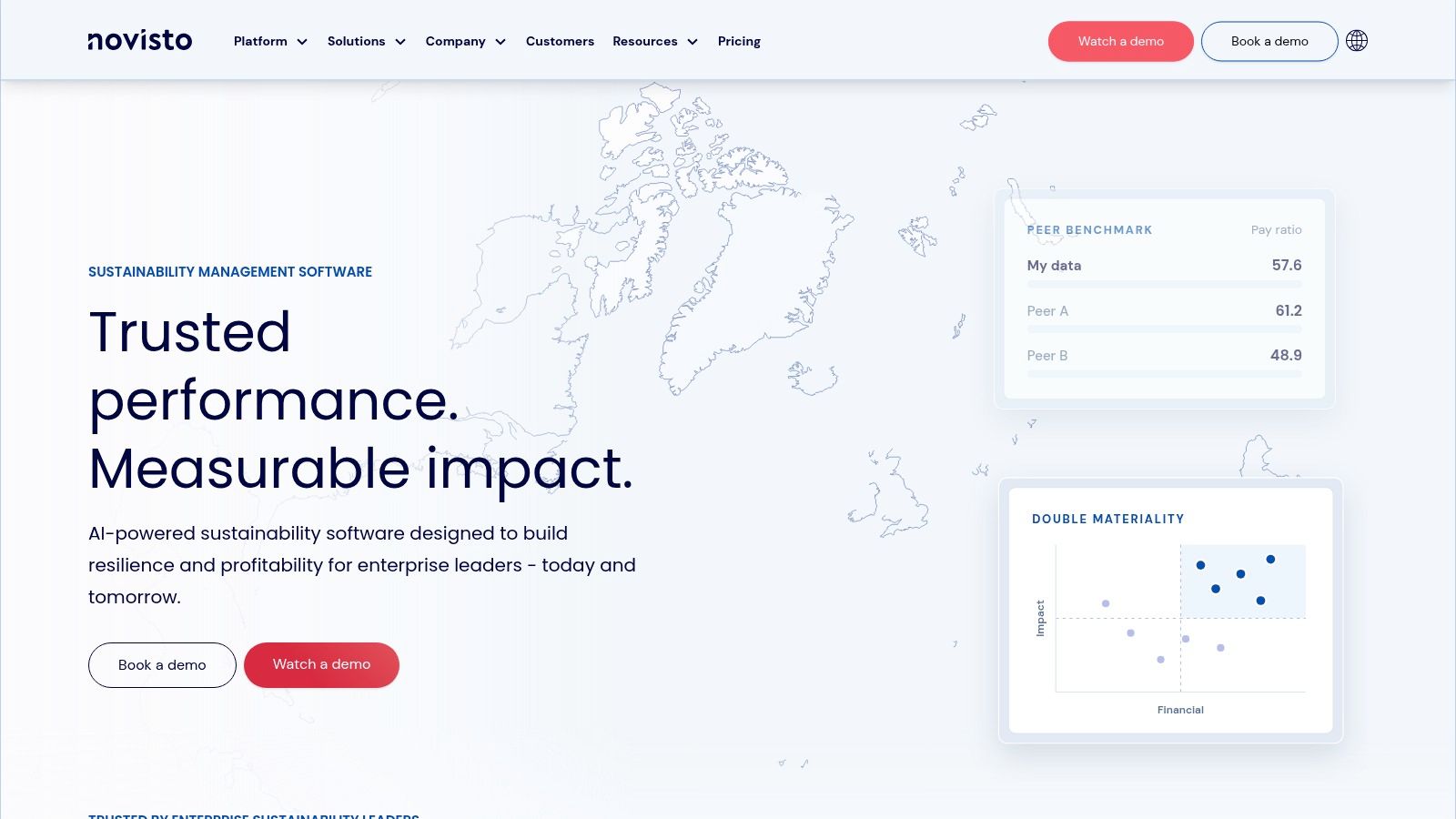
The pitch from Novisto is collect once, report many times. The vendor says data mapped in the platform can be reused across 34 frameworks, which is a direct answer to framework sprawl.
That sprawl is real. In an ISS Corporate survey of 71 corporate issuers, 90% reported current or planned use of more than one reporting framework and 79% expressed interest in three or more. Respondents valued audit trails, data validation and alignment across frameworks, all areas Novisto emphasises through data lineage and AI-supported document analysis and validation.
What to test in a demo
Terminology and structure: Some reviewers found data structures and labels hard to use, so portfolio company contributors should test it, not just head office.
Breadth: Separate capabilities cover ESG, carbon, risk and performance, plus Word integration for drafting.
Fit: The enterprise orientation can be heavy for a smaller company or a single reporting cycle. Pricing isn't public.
Responsive support and secure, auditable storage get cited by reviewers. The practical question is whether the data model reduces repeat collection in practice or moves the mapping work upfront.
5. Persefoni
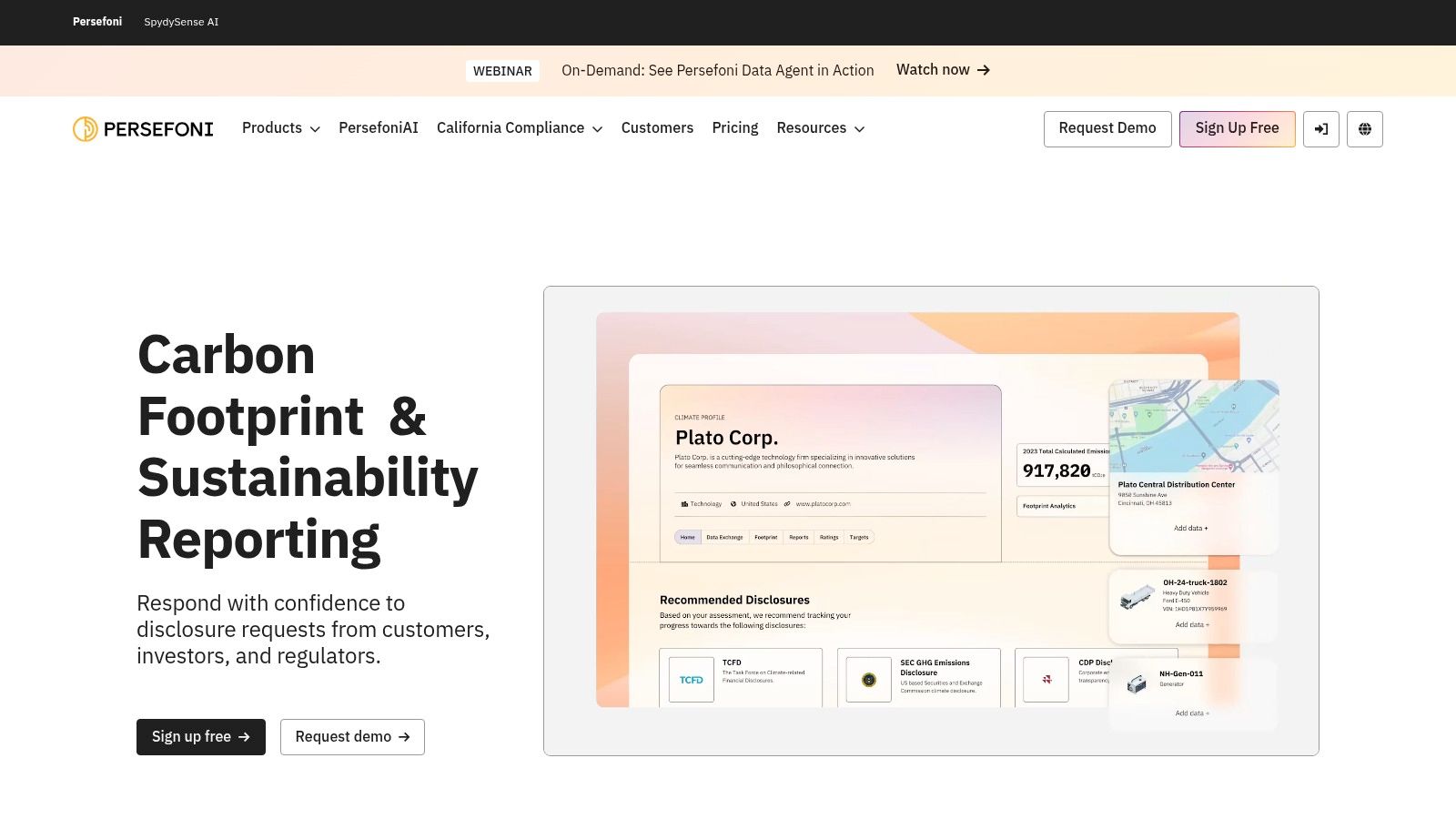
Persefoni is the easiest entry on this list to test because its self-service Pro tier is free. It covers Scope 1 to 3 emissions accounting, including all 15 Scope 3 categories in Pro according to the vendor, plus a Sustainability Report Builder with guided workflows for CSRD, CDP and ISSB.
That makes it a sensible testbed when emissions are the blocking item, for example a portfolio company that needs a first defensible footprint before a lender review. Teams wrestling with incomplete supplier inputs should read the guidance on measuring Scope 3 when supplier data is missing, because a guided workflow still needs a documented estimate method behind every figure a lender might challenge.
The limits are visible, which is to its credit. Free self-service tiers of this kind are usually built for individual use, so a multi-site rollout typically means moving to a paid plan for controls, integrations and supplier engagement.
Persefoni's centre of gravity is carbon accounting. Social and governance coverage is thinner, so funds should treat it as a strong emissions engine that sits beside broader ESG reporting software rather than replacing it.
6. Watershed
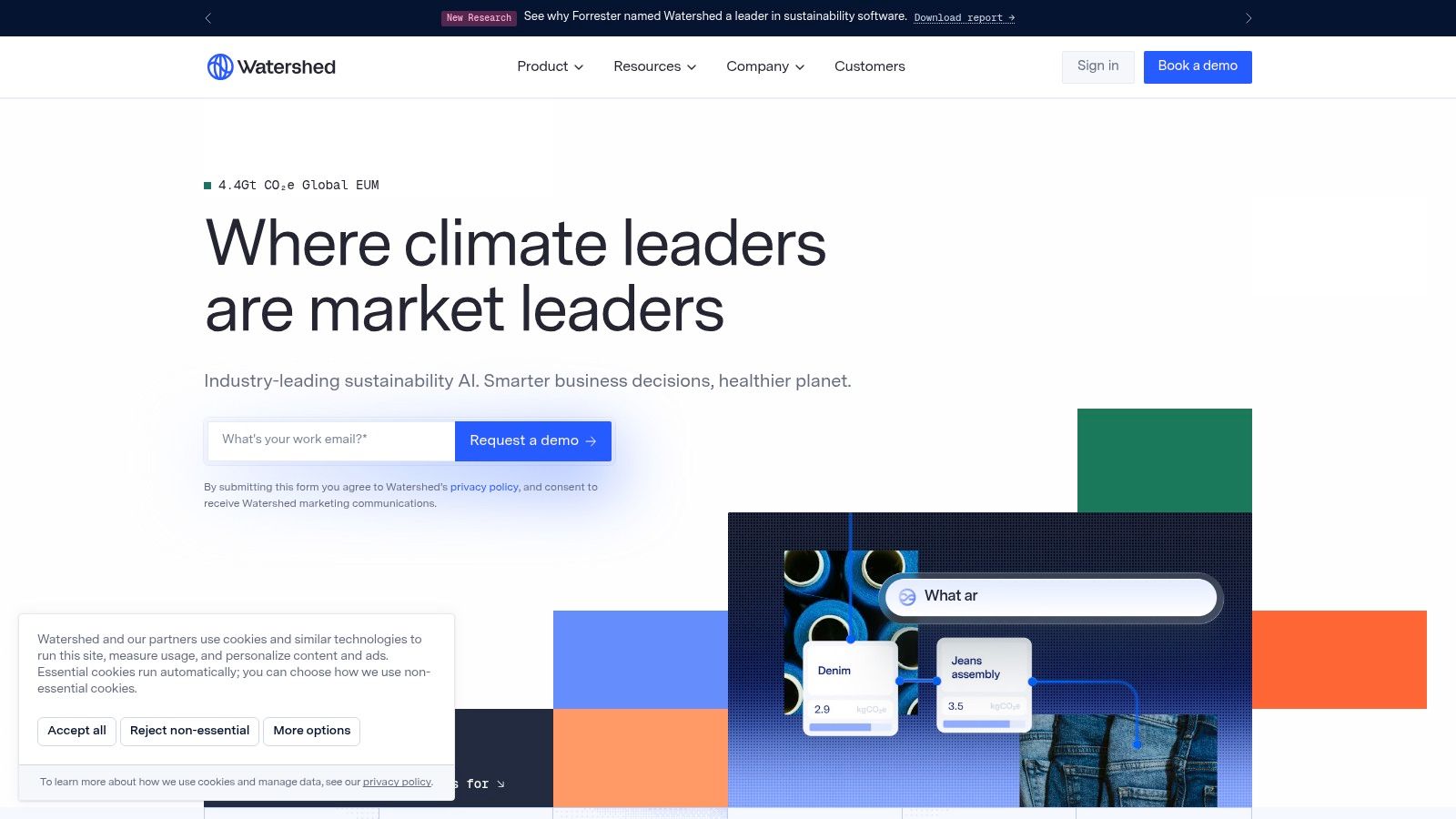
Watershed starts with emissions measurement and builds reporting and decarbonisation on top. The practical pitch is less manual assembly: automated ingestion, document workflows and a large emissions-factor database take over the collection work that still eats reporting cycles.
The scale of that habit is striking. The Achilles sustainability survey report reported that over 90% of 547 executives were using or planning to use spreadsheets for sustainability reporting. Replacing spreadsheet roll-ups requires ingestion that handles messy files and reconciliation that holds up under scrutiny, which is where Watershed puts its effort.
Watershed product materials emphasise calculation transparency and data lineage, and that matters when a lender or board member asks why a figure moved between drafts. Its reporting tools reuse data across outputs, coverage extends to ESG metrics beyond carbon, and supplier engagement plus climate action planning push it toward decision support rather than filing alone. Buyers sorting category overlap may find the explainer on carbon accounting versus carbon footprint versus ESG reporting useful before scoping.
The trade-off is scale. Watershed is enterprise-focused and public pricing wasn't found, so budget for an implementation owner rather than a self-serve rollout. Its emissions depth can outrun a basic disclosure mandate, and social and governance coverage should be checked line by line against portfolio requirements.
7. IBM Envizi ESG Suite
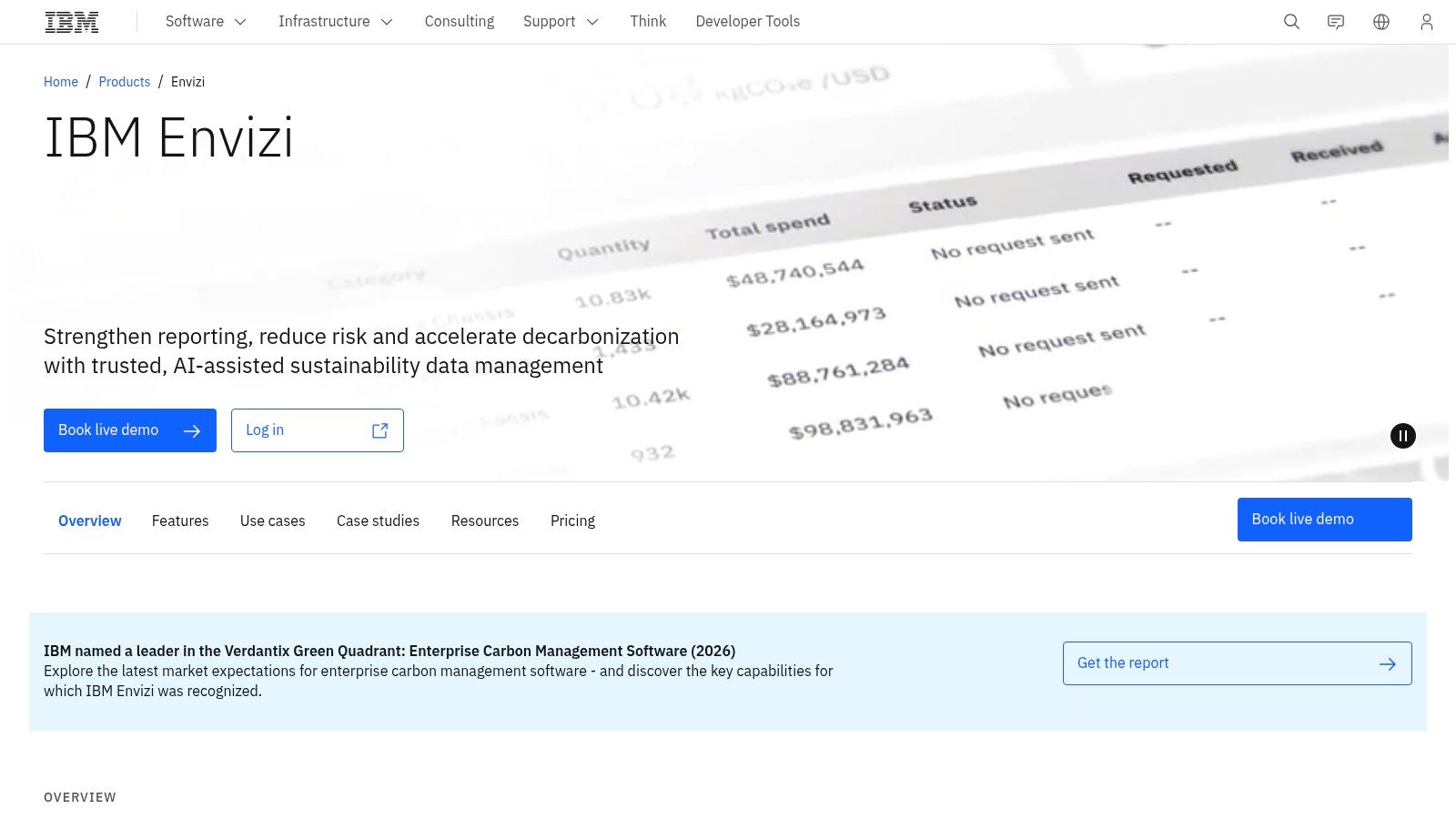
For groups drowning in operational data feeds, IBM Envizi is the consolidation play. IBM says it captures and consolidates more than 500 types of ESG data, with a greenhouse gas calculation engine built around the GHG Protocol and emission-factor traceability.
Framework reporting support includes ESRS, GRI, SASB and TCFD, alongside target tracking and sustainability planning. Two capabilities stand out for investors: supplier data handling and Scope 3 financed emissions, which speak directly to portfolio-level reporting rather than a single site's footprint.
Method choices still need human decisions. Energy data is a good example, and the distinction in location-based versus market-based Scope 2 reporting shows why a calculation engine doesn't remove the need to agree and document an approach.
Strength: Breadth across capture, emissions, disclosure and planning for complex data estates.
Cost of that breadth: Implementation and systems integration effort, plus functionality a simpler reporter won't use.
Commercials: Pricing isn't publicly listed.
Envizi suits a large portfolio company or fund platform with IT capacity. Without that capacity, breadth becomes shelfware.
8. Diligent ESG
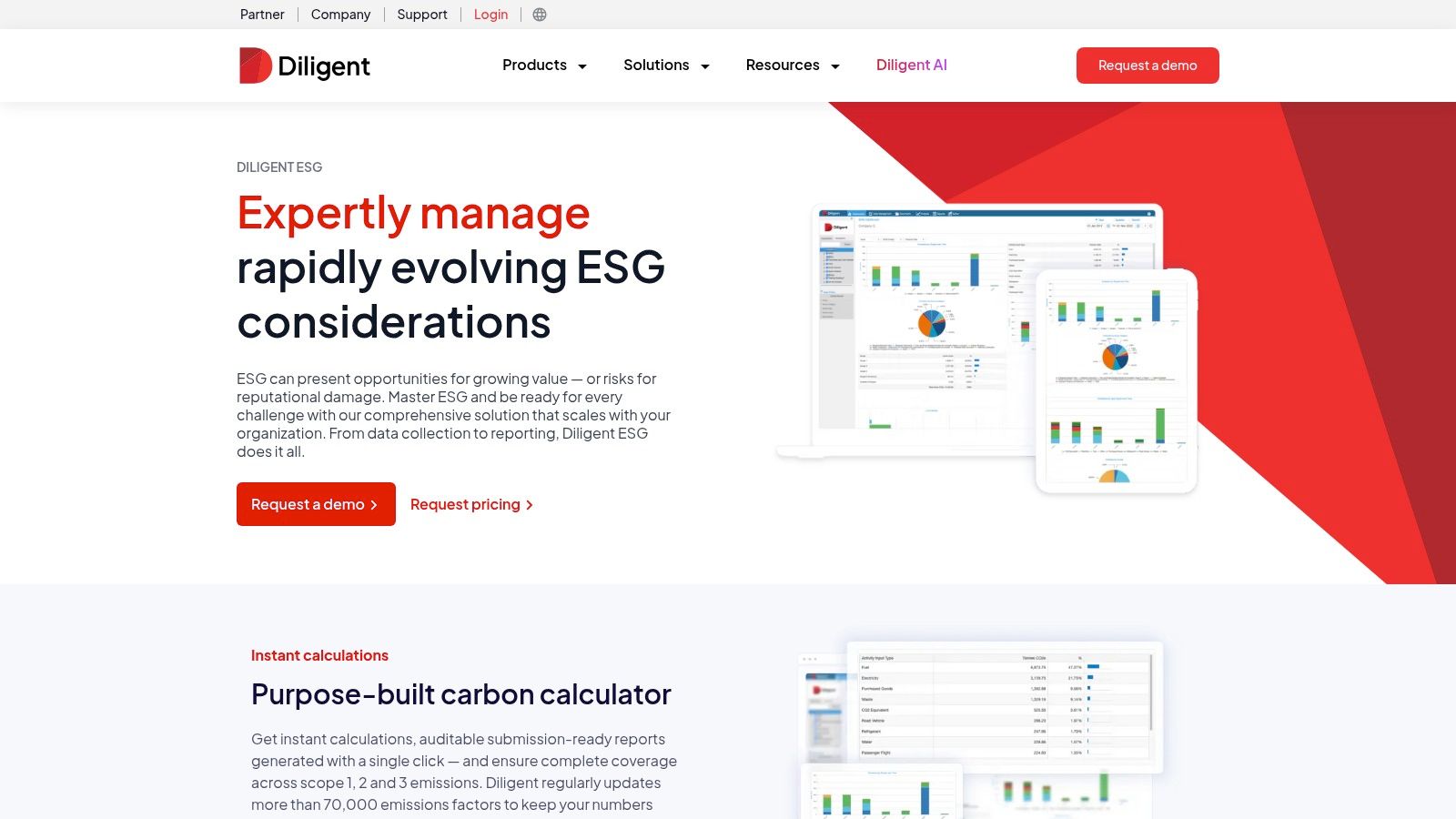
Diligent ESG makes most sense where Diligent already runs board governance. ESG data collection, surveys, dashboards and reporting then sit inside a governance, risk and compliance environment that company secretaries and audit teams already know.
Its carbon calculator covers Scopes 1 to 3 and, according to Diligent, draws on an emissions-factor database of more than 70,000 factors. Employee and supplier surveys give a structured route for data that doesn't live in a finance system, which is often where Scope 3 collection stalls.
Due diligence points
There's no public list price or self-serve purchase path, so procurement runs through sales. Some third-party ratings cover Diligent's wider product portfolio rather than the ESG module specifically, which makes headline scores a weak proxy for reporting depth.
Framework coverage, implementation scope and actual reporting outputs therefore need validating in a demo using real company data. Governance adjacency is a genuine convenience. It isn't evidence that emissions methodology or disclosure mapping fits a specific CSRD or lender requirement, and buyers shouldn't let an existing board portal contract settle that question by default.
9. Sweep
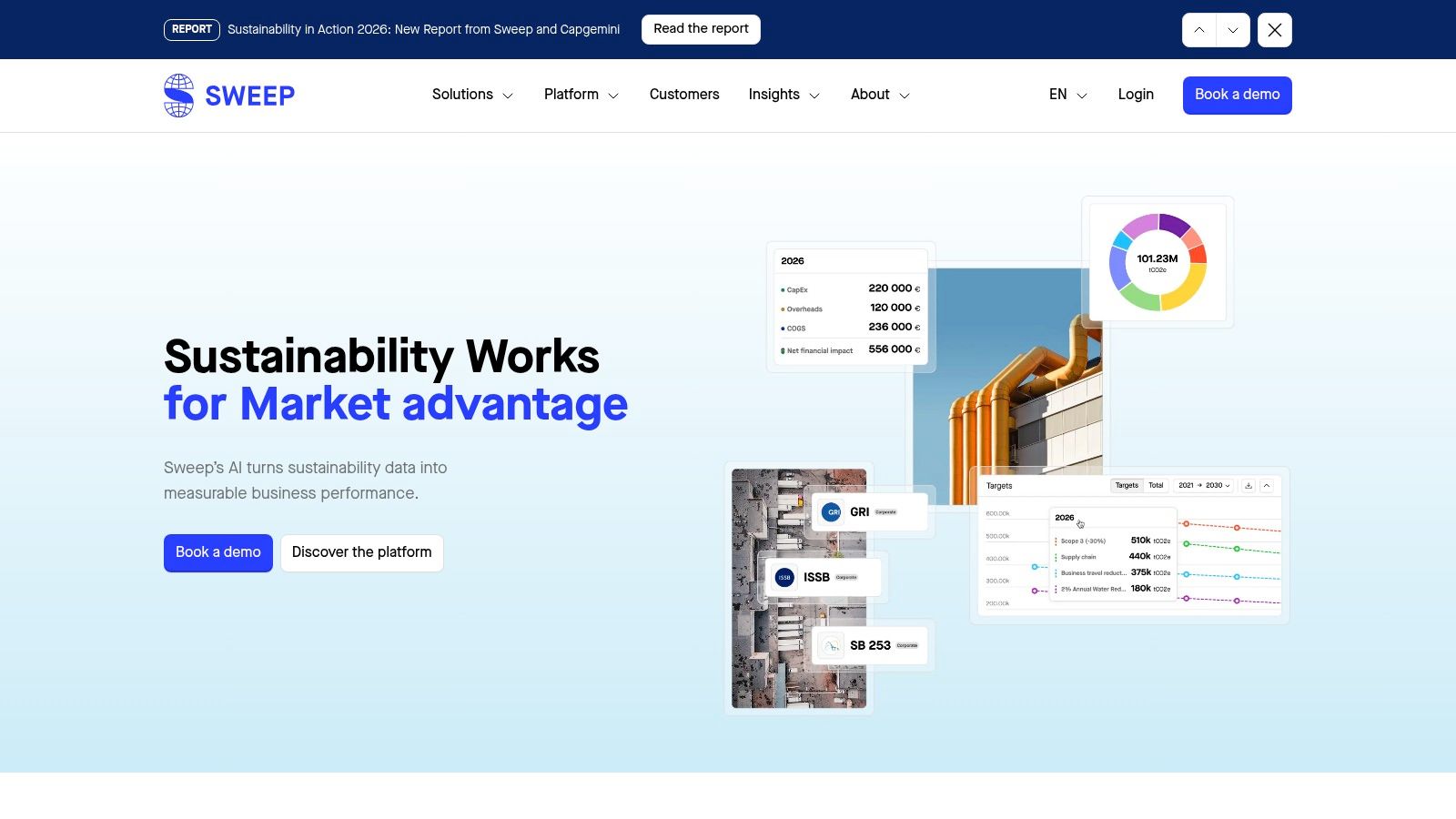
Sweep positions a shared dataset as the base for emissions, disclosure and business analytics. Carbon accounting spans Scopes 1 to 3 across corporate, product and financed emissions, with disclosure support for CSRD, ISSB, GRI, CDP and TCFD.
Supplier engagement tools are designed for large value chains, and AI-assisted data mapping and analytics aim to get sustainability data used outside the ESG function. That direction matches market movement. According to PwC's Global Sustainability Reporting Survey, 28% of companies surveyed in 2025 said they use AI for sustainability reporting, up from 11% the previous year, based on 496 executives and senior professionals across 40 countries and territories.
Practical rule: AI mapping speeds up classification. It doesn't decide whether an estimate is good enough to lend against.
Breadth cuts both ways. Emissions, disclosure, supplier workflows and integrations in one platform need careful scoping, configuration and a clear owner. Pricing isn't publicly listed. Funds drawn to the financed emissions claim should test the methodology against their exact reporting boundary, because portfolio boundaries are where generic demos tend to stay vague.
10. Greenly
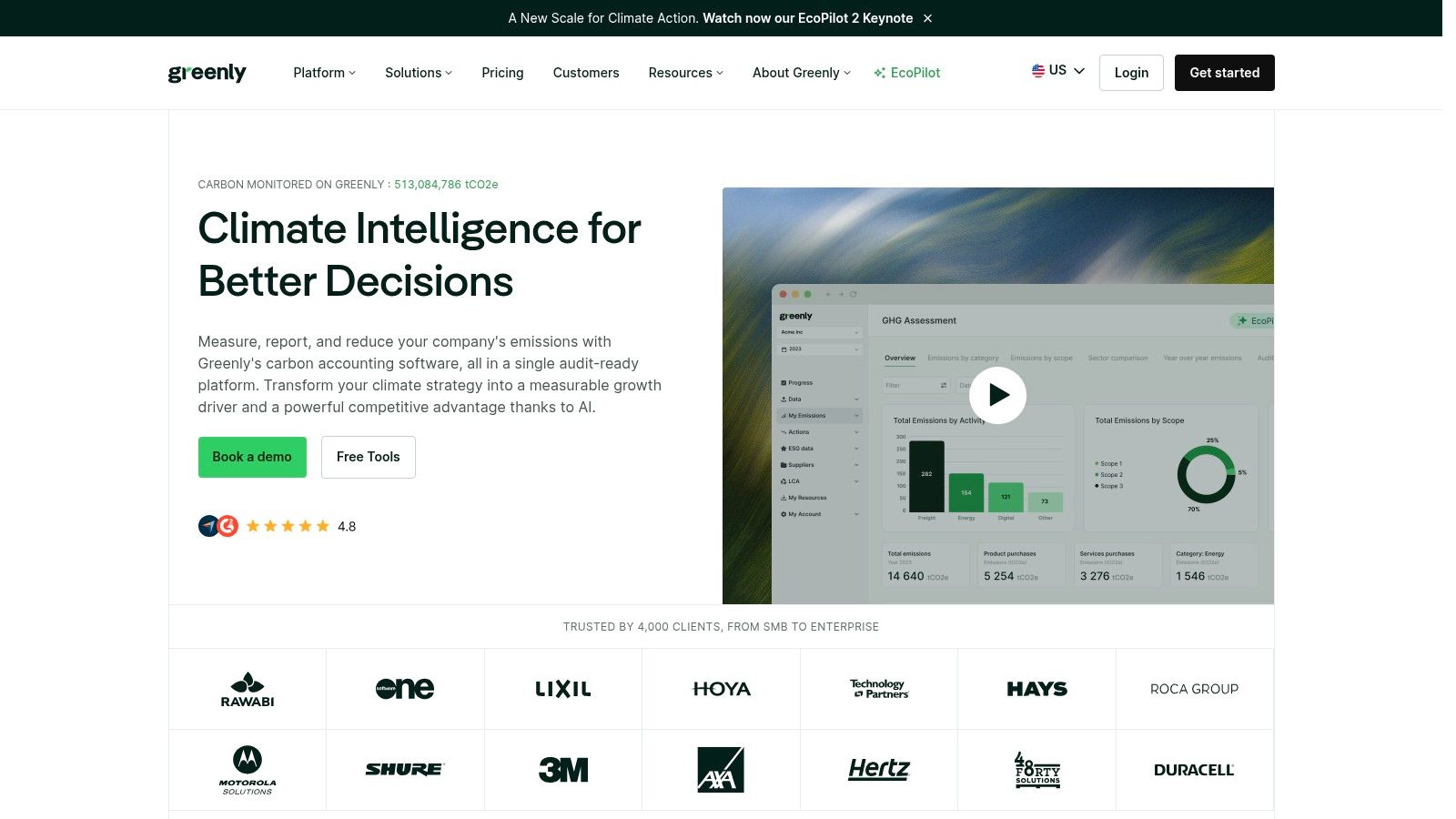
Greenly is the accessible climate-first option in this set. It combines carbon footprint calculation, decarbonisation planning, corporate reporting for selected frameworks, supplier and value-chain tools, and product reporting with life-cycle assessment related capabilities.
One commercial detail sets it apart from most rivals here. Greenly offers a pricing calculator for an initial estimate, so a finance team can get a rough number before entering a sales cycle, even though the final figure still depends on organisational needs and a quote.
Adoption context supports that low-friction approach for smaller companies. A Reuters Events Sustainability Reporting Outlook summary reported that in 2025, 51% of respondents said the EU Omnibus proposals had affected their CSRD strategy, while nearly 90% expected AI to have a material impact on sustainability reporting. Shifting scope punishes heavy, slow implementations.
The trade-off is emphasis. Greenly's core is climate and carbon rather than broad governance reporting. Buyers should confirm alignment with their specific regulatory and assurance requirements instead of assuming a clean footprint equals a complete disclosure.
How the ten platforms compare on focus, pricing transparency and best fit
| Item | Primary focus | Public pricing | Best for |
|---|---|---|---|
| Axion Lab | Sustainability capital allocation linked to costs and EBITDA impact | No standard price published; free trial for three portfolio companies | Private equity teams prioritizing sustainability actions across investments |
| Position Green | ESG management, reporting, and portfolio monitoring | Not publicly listed | Investors managing consistent ESG data across portfolio companies |
| Workiva | Sustainability disclosures integrated with financial reporting and governance | Not publicly listed | Organizations coordinating controlled, multi-team reporting |
| Novisto | ESG data collection, carbon accounting, and reporting | Not publicly listed | Enterprises reusing ESG data across reporting frameworks |
| Persefoni | Carbon accounting and sustainability reporting | Free Pro tier; paid enterprise options | Organizations focused on emissions accounting and guided disclosures |
| Watershed | Emissions measurement, reporting, and decarbonization | Not publicly listed | Enterprises prioritizing emissions measurement and climate action |
| IBM Envizi ESG Suite | ESG data management, emissions accounting, and disclosure | Not publicly listed | Organizations with complex ESG data and Scope 3 needs |
| Diligent ESG | ESG data, emissions reporting, and governance workflows | Not publicly listed | Organizations already using Diligent governance products |
| Sweep | Emissions, ESG disclosure, and value-chain engagement | Not publicly listed | Organizations needing supplier and financed-emissions workflows |
| Greenly | Carbon accounting, climate reporting, and decarbonization | Pricing calculator available; final quote required | Businesses managing corporate, supplier, and product climate data |
Turning a Shortlist into a Defensible Decision
Start with the decision, not the demo. A fund that needs to rank sustainability spending across twelve portfolio companies is buying something different from a single company that needs a CSRD filing or a footprint for a customer questionnaire. Carbon engines, disclosure platforms and capital allocation analysis overlap, but they aren't interchangeable, and buying one to do another's job is how teams end up with polished reports and unanswered investment questions.
Regulatory scale explains the urgency, but it shouldn't set the whole specification. The CSRD entered into force on January 5, 2023, and Microsoft's CSRD learning centre cites estimates that the broader population could reach nearly 50,000 companies, compared with approximately 11,700 previously required to disclose non-financial information. Even companies outside direct scope get pulled in through EU parents, lenders and value-chain requests.
Four tests that separate tools quickly
Traceability: Can every figure be followed to an owner, source document, calculation, assumption and review decision, and exported for a lender or auditor? Software output isn't an assurance opinion, a gap explored in recent CSRD implementation research, where data collection from multiple stakeholders and engagement with assurance providers remain practical challenges.
Comparability without false standardisation: Consistent definitions should coexist with company-specific evidence and explicit uncertainty. That tension runs through Societe Generale's 2025 private equity analysis, which reports data quality and access as major obstacles for small and mid-sized companies alongside portfolio comparability and verification.
Ownership after go-live: Who configures metrics, chases contributors and maintains factors in month thirteen? Several tools above take for granted a capable internal administrator.
Proof, then price: A demo should run on the buyer's own documents, and scope, deliverables and cost should be confirmed in writing before commitment.
That last discipline applies well beyond sustainability tools, as shown in broader technology sourcing guidance for CIOs. Adoption is still uneven enough that process design matters as much as licences. According to Deloitte's C-suite technology sustainability report summary, in 2025 49% of surveyed companies used technology solutions for external sustainability reporting, so half the market is still building the habit these platforms assume.
The strongest shortlist usually contains two or three tools matched to one named decision, a financing, a board cycle, a transaction or a portfolio rollout. Test those against real files, inspect the audit trail behind one ugly estimated number, and ask who signs the output when it's challenged. The right ESG reporting software is the one whose answers survive that meeting.
For investment teams that need sustainability work priced and prioritised rather than just reported, Axion Lab offers a free trial across three portfolio companies, with a Sustainability Capital Allocation map for each and a one-hour walkthrough with a senior expert. Visit the site to scope a trial using documents those companies already have, and see which actions protect or create EBITDA before committing capital.